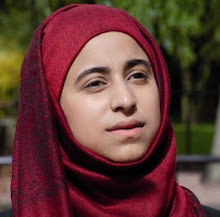
"Young people's faces will appear on billboards across England and Wales as part of a drive against knife crime."
The above is quoted from the BBC
Can we deal with knife crime by naming and shaming the offenders, and making public a list of supporters for the campaign against the crime? I certainly don't think so. See my article Not so Black and White here.
Also, you can see a bunch of interesting comments surrounding early intervention as a deterrent here on Have Your Say.
Monday, 3 November 2008


Wednesday, 29 October 2008
Birmingham Ethnic Minority Assocation
 The committee elections were held today. After a year in position, the outgoing committee are looking forward to the incoming taking from where they left.
I myself look forward to meeting the new committee next week.
Tuesday, 28 October 2008
Sports Forum
The VP Sport has orgainsed this one. It will take place tomorrow at 5:30pm in the Guild Council Chambers. This is your chance to come forward and ensure the issue that matters to you is dealt with.
In the past, there have been numerous attempts to organise women only slots. It never worked out. However, I've spoken to a member of the Women's Association and we are looking to re-start the effort via this forum.
For information please get in touch by either leaving a comment or e-mailing me.
Many thanks.
In the past, there have been numerous attempts to organise women only slots. It never worked out. However, I've spoken to a member of the Women's Association and we are looking to re-start the effort via this forum.
For information please get in touch by either leaving a comment or e-mailing me.
Many thanks.
Wednesday, 22 October 2008
Charity Week Midlands
We are in the midst of Charity Week!
"The idea behind Charity Week is simple; to unify in our efforts to help those in need by raising money and awareness for orphans across the world. Charity Week Midlands was established for the mobilisation of the huge Muslim student population in the Midlands in 2005. Since then, it has significantly grown and has now become a permanent campaign run in more and more educational institutions in the Midlands each year. The enormity of the project can be seen with last year’s project raising an outstanding £19,638!"
http://www.cwmidlands.co.uk/
CW Midlands has done some brilliant work and the volunteers have worked extremely hard. It definitely is a great initiative.
The punch line is "One Week to Make a Difference". I certainly support the notion of collecting to help the poor or in this case the orphans. However, the concept of change and making a difference - which every charity advocates - I will argue is quite specific. And what follows is a discussion around the topic of change. We certainly need it - everybody wishes to achieve it and people are adopting various ways in order to bring it! My post will focus on the work of charities that aim to alleviate poverty and help orphans. The topic of the post is beyond the discussion of should or shouldn’t we collect money. Rather, the discussion is on how we need to understand the concept of change and where we place the collection of money in the whole picture.
Poverty is a defining feature for many countries and one thing we all want to change. Does the presence of poverty mean a lack of money however? I was on my way to a lecture when I stopped to chat to a student nurse who had displayed some of her work. She spent a month in India and was exposed to health care in the country. She brought back pictures, ornaments and a lot about what she had witnessed. When she told me how bad the health care was, I asked her why that was. She replied by stating a "lack of money". Thereafter, together we pinpointed that very reason in order to understand it. What we concluded was that if we look to how many resources India has (including money); there is no shortage at all. They have plenty. The problem is in the way these resources are distributed.
When the discussion starts to play with distribution, immediately we know that we are dealing with the organisation of a society: governance. If we look back at what makes a society, the way it is governed plays a major role. The system of governance is authoritative, just as the individuals and their common thoughts are. Therefore, in the context of wishing to make a difference, one needs to take this into account. Otherwise, we will be making a superficial change. By superficial change I mean the following: if a man came knocking on my door every week to ask for money in order to help him survive, I will give happily and encourage others to do the same. Now, can I make sense of my giving as making change in this poor person’s life? (Note my emphasis on the word change.)
What is change? Change is when the poor person who comes knocking on my door will never come again because he will have his own means of production by which he will survive. However, until he gets there, we will keep giving him some money, and at the same time we will ensure we are arranging to get the seeds he needs to grow his own crops with in order to sell and make a profit. One can argue this is what Islamic Relief or Oxfam does. They buy certain resources to help the individual stand on their feet. This is dealing with one person though. We know that in this world we have to take care of ‘societies’ - because individuals make a society. How is that done? Via governance?
I believe all charities are present to put a bandage on the wound. And we need people to do this job. However, those that are wounded and likewise those that are treating the wound need to understand that the only way we can deal with the problem is by ensuring the people are never wounded in the first place. This is possible. We have had it in the past. In fact the debate today is exactly about that. Titles such as "does capitalism still work?" by newsnight, "credit crunch", even the "war on terror" are all expressions of this very debate: in search for the best way to organise society by.
With reference to orphans, there are many around the world that urgently need our help. Again the point follows the same pattern. What does help mean? Another point to mention here about orphans is that will the West keep waging illegal wars in the Middle East, keep creating thousands of orphans, and we here keep collecting for them in order to help them survive? No.
Whilst some dwell upon the concept of change, and whilst others are achieving it, the orphans and poor need our money. So dig deep when somebody approaches you on campus this week and click here before you leave.
End.
"The idea behind Charity Week is simple; to unify in our efforts to help those in need by raising money and awareness for orphans across the world. Charity Week Midlands was established for the mobilisation of the huge Muslim student population in the Midlands in 2005. Since then, it has significantly grown and has now become a permanent campaign run in more and more educational institutions in the Midlands each year. The enormity of the project can be seen with last year’s project raising an outstanding £19,638!"
http://www.cwmidlands.co.uk/
CW Midlands has done some brilliant work and the volunteers have worked extremely hard. It definitely is a great initiative.
The punch line is "One Week to Make a Difference". I certainly support the notion of collecting to help the poor or in this case the orphans. However, the concept of change and making a difference - which every charity advocates - I will argue is quite specific. And what follows is a discussion around the topic of change. We certainly need it - everybody wishes to achieve it and people are adopting various ways in order to bring it! My post will focus on the work of charities that aim to alleviate poverty and help orphans. The topic of the post is beyond the discussion of should or shouldn’t we collect money. Rather, the discussion is on how we need to understand the concept of change and where we place the collection of money in the whole picture.
Poverty is a defining feature for many countries and one thing we all want to change. Does the presence of poverty mean a lack of money however? I was on my way to a lecture when I stopped to chat to a student nurse who had displayed some of her work. She spent a month in India and was exposed to health care in the country. She brought back pictures, ornaments and a lot about what she had witnessed. When she told me how bad the health care was, I asked her why that was. She replied by stating a "lack of money". Thereafter, together we pinpointed that very reason in order to understand it. What we concluded was that if we look to how many resources India has (including money); there is no shortage at all. They have plenty. The problem is in the way these resources are distributed.
When the discussion starts to play with distribution, immediately we know that we are dealing with the organisation of a society: governance. If we look back at what makes a society, the way it is governed plays a major role. The system of governance is authoritative, just as the individuals and their common thoughts are. Therefore, in the context of wishing to make a difference, one needs to take this into account. Otherwise, we will be making a superficial change. By superficial change I mean the following: if a man came knocking on my door every week to ask for money in order to help him survive, I will give happily and encourage others to do the same. Now, can I make sense of my giving as making change in this poor person’s life? (Note my emphasis on the word change.)
What is change? Change is when the poor person who comes knocking on my door will never come again because he will have his own means of production by which he will survive. However, until he gets there, we will keep giving him some money, and at the same time we will ensure we are arranging to get the seeds he needs to grow his own crops with in order to sell and make a profit. One can argue this is what Islamic Relief or Oxfam does. They buy certain resources to help the individual stand on their feet. This is dealing with one person though. We know that in this world we have to take care of ‘societies’ - because individuals make a society. How is that done? Via governance?
I believe all charities are present to put a bandage on the wound. And we need people to do this job. However, those that are wounded and likewise those that are treating the wound need to understand that the only way we can deal with the problem is by ensuring the people are never wounded in the first place. This is possible. We have had it in the past. In fact the debate today is exactly about that. Titles such as "does capitalism still work?" by newsnight, "credit crunch", even the "war on terror" are all expressions of this very debate: in search for the best way to organise society by.
With reference to orphans, there are many around the world that urgently need our help. Again the point follows the same pattern. What does help mean? Another point to mention here about orphans is that will the West keep waging illegal wars in the Middle East, keep creating thousands of orphans, and we here keep collecting for them in order to help them survive? No.
Whilst some dwell upon the concept of change, and whilst others are achieving it, the orphans and poor need our money. So dig deep when somebody approaches you on campus this week and click here before you leave.
End.
The New Black Magazine
A great online magazine.
The Editor of the Magazine will be joining us on the 29th October at the round-off event of Black History Month. He will talk to us about Black British Journalism in the Age of Barack Obama.
Great one.
The Editor of the Magazine will be joining us on the 29th October at the round-off event of Black History Month. He will talk to us about Black British Journalism in the Age of Barack Obama.
Great one.
Manifesto: Update
In the second post, I mentioned stating my work in relation to my policy as we move along. After having posted information on what I have been doing, either I now pin point a post to my manifesto point, or let the reader of my blog do it.
At preset, I am rather receptive to the latter.
At preset, I am rather receptive to the latter.
Anonymous Marking
I have been working alongside the VP E&A with Anonymous marking. Students on campus were consulted regarding the policy in place. They were able to voice their concerns via the questions we posed on paper. After the results have been collated and reviewed, Guild Council will be presented with the whole matter via a motion.
More to follow - later.
More to follow - later.
Subscribe to:
Posts (Atom)